
When your baby has a fever, it helps to have the readings and times in one place. If you’re wondering which baby fever symptoms to write down, start with what’s changed. A baby temperature log can be a simple starting point for baby fever tracking. You can keep the readings there and add a short note about anything you’ve noticed.
We’ll cover what to note about temperature readings, feeding, and wet diapers, along with any medicine you’ve given or advice from your pediatrician. You’ll also see how to keep those details together in Baby Daybook so you can find them when you call or someone else takes over.

When to Get Medical Help
The American Academy of Pediatrics (AAP) considers a rectal temperature of 100.4°F (38°C) or higher a fever. It advises calling your baby’s doctor immediately if your baby is 3 months old or younger and has that reading, even if they seem well.
Call your local emergency number now if your baby has signs such as difficulty breathing, blue or gray lips or tongue, difficulty waking, or a first seizure. The NHS emergency warning signs include these and other symptoms.
If you’re worried about your baby, it’s okay to call with what you know. The notes can wait. Your baby’s healthcare professional can tell you what to do next and when to take another reading.
What Is Useful to Write Down?
A few details are enough to jog your memory. Start with these and add anything your healthcare professional asks you to track.
- The exact reading, including the unit. For example, 100.6°F or 38.1°C.
- When you took it. Write down the date and time.
- How you took it. Rectal, underarm, or forehead, for example.
- What you noticed. Note what changed and when you first noticed it.
If you’re tracking baby fever symptoms, a short note is enough. “Cough started this morning” or “Drank less than usual at the last feed” gives you something specific to share if you call your baby’s doctor.
How you take the temperature matters. Some methods are more accurate than others, and your baby’s age affects which method to use. Follow the thermometer instructions and your healthcare professional’s advice. The AAP’s thermometer guide explains how methods differ in accuracy and suitability by age.
Baby Fever Tracking in Baby Daybook
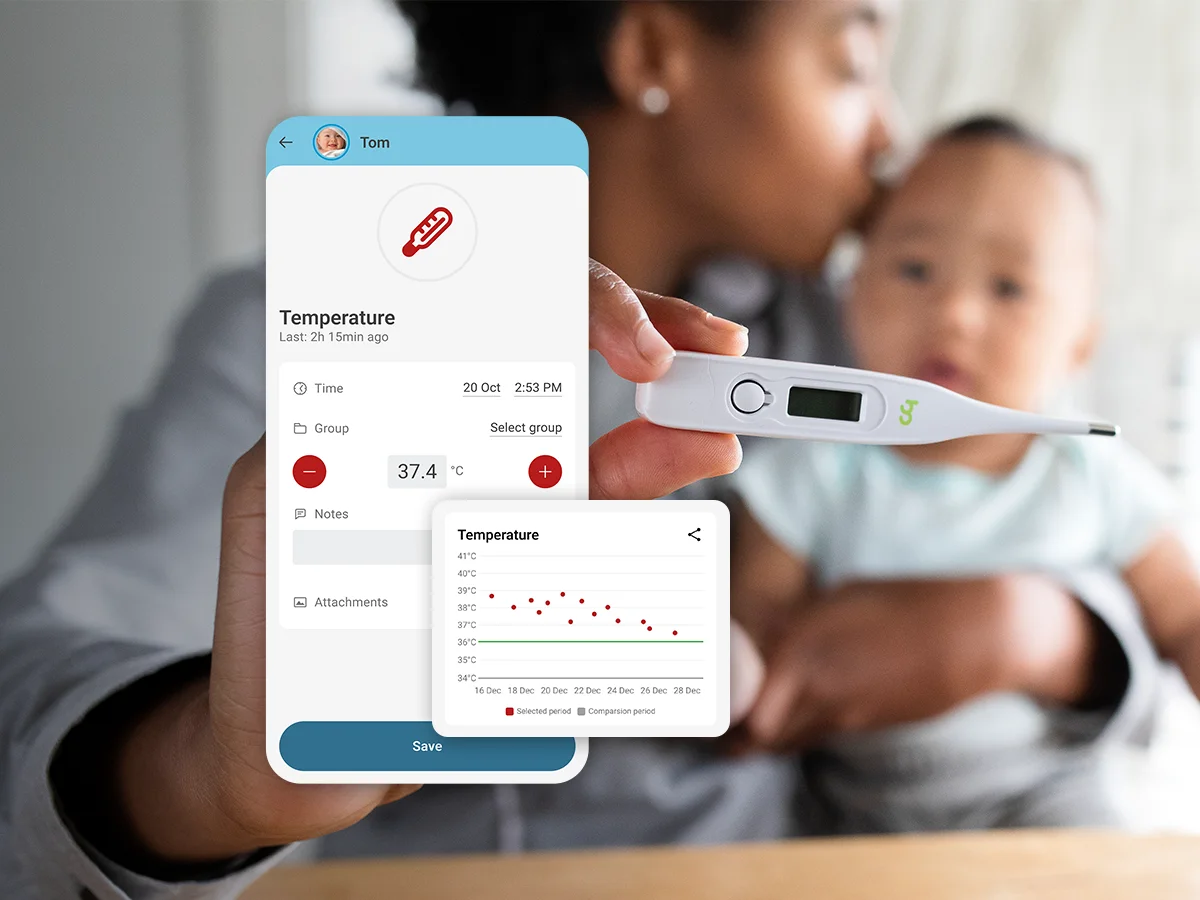
In Baby Daybook, use the Temperature activity to log each reading with its date and time. In Notes, add how you took it and anything you noticed. “Measured rectally” or “settled after being held” is enough.
You can log feeds, diaper changes, and any medicine you’ve given in Baby Daybook. If you notice a cough or a rash while your baby has a fever, you can log it in Symptoms. Pick a symptom from the list or add your own, then set the time you first noticed it. If you’d like to keep a photo of how the rash looked, you can save it with the entry.
Here’s what three entries might look like.
- 8:10 a.m. · Temperature – 100.6°F, taken rectally.
- 8:30 a.m. · Bottle feeding – Drank 60 ml.
- 9:00 a.m. · Diaper change – Wet.
- 9:15 a.m. · Symptoms – Cough first noticed at this time.
These are example entries, not a suggested schedule for checking temperatures or feeding.
How to Review Your Baby’s Temperature Log
Filter the Timeline to review your baby temperature log. In Statistics, the Temperature chart displays your logged readings and the highest recorded temperature for the selected period.
You can refer to these entries when talking to another caregiver or your baby’s healthcare professional. Keep the measurement method in each entry’s Notes, and mention if you used different methods.
Keep Feeds and Wet Diapers in the Picture
Temperature may be the first thing you write down, but your healthcare professional may also ask about your baby’s feeding and wet diapers. The NHS fever guidance explains which changes need medical attention.
If you already log feeds and diapers in Baby Daybook, keep logging them as usual. For a bottle feed, enter how much your baby drank. If you’re breastfeeding, you can use the timer to track how long the feed lasted and add a note if anything was different. Something like “Stopped sooner than usual” is enough.
Ask your healthcare professional about changes in feeding while your baby is unwell.
Note Any Medicine Already Given
If you’ve already given medicine as advised by your baby’s healthcare professional, write down the name, strength, how much you gave, and when. If someone else takes over, you can share those details with them.
Keep the bottle and instructions available, and follow your healthcare professional’s advice and the product directions for the dose and timing.
Sharing Fever Records With Another Caregiver
When someone else takes over, give them a quick update. What was the last temperature reading? When did your baby last feed? Was any medicine given, and when? If you spoke with your baby’s healthcare professional, share what they asked you to watch for. More tips for sharing baby care
In Baby Daybook, Day Notes are handy for a detail that sums up the day, like “Slept in short stretches and drank less than usual.” The note stays in your history if you want to look back later.
With Family Sync in Baby Daybook, the other caregiver can see the log on their own phone. If either of you is unsure when medicine was last given, talk it through as you hand over care.
Have the Useful Details Ready When You Call
If you’ve been tracking your baby’s fever, your notes can help you explain what changed and when. Here’s what may be useful to have on hand:
- Your baby’s age and what has changed.
- Temperature readings, times, and measurement methods.
- When symptoms started.
- Recent feeds and wet diapers.
- Recent vaccinations and any medicine already given.
It’s okay if some details are missing. You can call with what you know.
After the call, make a note of what to watch for, when to call back, and any follow-up you’ve arranged. Keep those notes handy so anyone else caring for your baby can refer to them.
Baby Fever FAQs
What temperature counts as a fever in a baby?
The American Academy of Pediatrics considers a rectal temperature of 100.4°F (38°C) or higher a fever. How you measured the temperature matters, so keep the measurement method beside the reading.
When should I call a healthcare professional about my baby’s fever?
The AAP advises calling your baby’s doctor immediately if your baby is 3 months old or younger and has a rectal temperature of 100.4°F (38°C) or higher, even if they seem well. At any age, seek advice if you are worried. For emergency warning signs, see When to Get Medical Help.
Why do different thermometers give different readings?
Readings can differ depending on where you measure, the thermometer you use, and how it is positioned. The AAP’s thermometer guide explains these differences. Record the exact reading, unit, and measurement method together, and tell your healthcare professional if you used different methods.
Which baby fever symptoms should I write down?
Notice changes in feeding, wet diapers, behavior, and breathing, along with new symptoms such as a cough, rash, vomiting, or diarrhea. A short note about what changed and when can help you explain it to your healthcare professional. The NHS fever guidance explains warning signs that need medical attention. Getting help comes before completing a log.
What should I keep track of when my baby has a fever?
For baby fever tracking, keep the temperature reading, date, time, and measurement method together. Add brief notes about feeds, wet diapers, symptoms you noticed, and any medicine already given, including its name, strength, amount, and time. Baby Daybook can help keep those details in one place. You do not need a complete record before contacting your baby’s healthcare professional.
Sources
American Academy of Pediatrics. (2024). How to take your child’s temperature. HealthyChildren.org. www.healthychildren.org
American Academy of Pediatrics. (2025). Fever and your baby. HealthyChildren.org. www.healthychildren.org
National Health Service. (2024). High temperature (fever) in children. www.nhs.uk